
Mobile World Congress (MWC) 2013 – Day III

Contents
The day II of the MWC was as rich as the first with many presentations, some more impressive than others. We propose to you an overview of what happen on day III…

Li-fi – the internet by the light
Already presented by Refugeeks, it is finally officially announced as a serious alternative to WiFi … To make it simple, and according to Suat Topsu, professor at the University of Versailles:
This technology converts the binary signal, a sequence of 0 and 1, into morse light. The LED will turn off and turn on, but at a speed invisible to the naked eye. With millions of variations per second, the data rate transmitted by the Lifi reach 100Mbit/s.
 A prototype has been presented to Congress (you can see a demonstration video unfortunately in French, of the prototype), a monitoring system, controlled by a smartphone and whose sound is sent by a light bulb. This technology has significant advantages, such as the non-existence of waves, and being 10 times faster than WiFi.
StriimLight the connected bulb
Soon even our toothbrushes will be connected ! :) The French AwoX Striim therefore present a speaker of 10 watts grafted onto a bulb, which connects to your smartphone via Bluetooth or WiFi, and plays any audio streams from the smartphone. 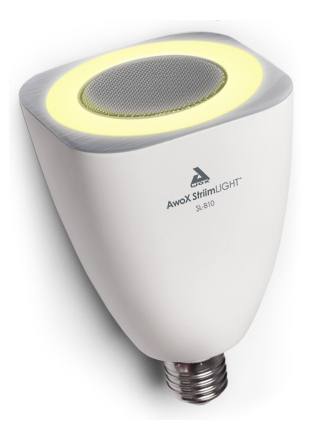
Two versions are provided, one Bluetooth comes with a remote control that allows you to control the bulb and the other, WiFi, comes with a dedicated application, which will control the bulb. Availability is announced for the end of the year, $130 for the Bluetooth version, and $170 for the WiFi version.
Everyone wants its piece of the cake
The French mobile operator Orange, has not presented one, not two, but three smartphones at MWC. The San Remo, Nivo, and Lumo. Among the three devices, one caught our attention because it has positioned itself as a serious alternative to some other smartphones. We present you the Lumo.
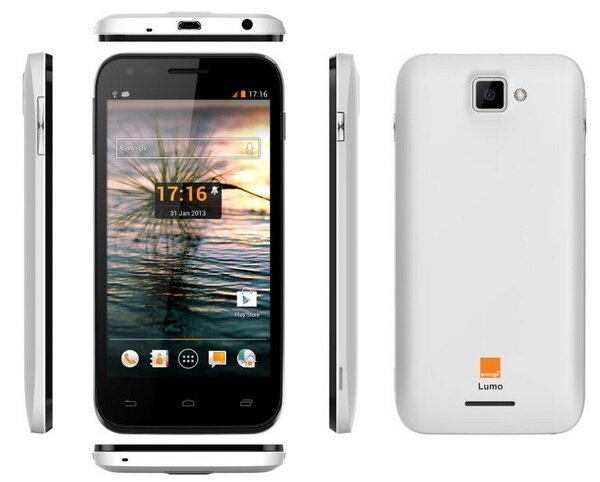
The Lumo boasts a Dual Core CPU from Qualcomm clocked at 1.2 GHz and powered by 1 GB of RAM. A 4.5 inches touch screen is used for display. A pretty good connectivity… WiFi, Bluetooth 4.0, DLNA … no more! It runs Android 4.1.2, with a custom Orange overlay.
The internal memory is 4GB expandable via microSD slot. A camera of 8 mega-pixels, with LED flash at the rear, and another one of 1.3 mega-pixels at the front. No more information has filtered, not even the price, but we can say that it will be available in May in Portugal. Other lands should be announced later.
LG does not remain the black sheep
LG presented yesterday, L7 Optimus Dual II, and today it is the turn of the Optimus F5. Let’s see what it has in the store for us…
At the outset, it is a 4G compatible smartphone. It is powered by a Dual Core CPU clocked at 1.2 GHz and supported by 1 GB of RAM. It has a 4.3 inch IPS touch screen, with a resolution of 960 x 540 pixels. It runs Android 4.1.2 Jelly Bean, with an overlay software made by LG.
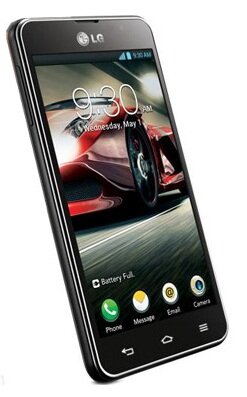
Two cameras, one of 8 mega-pixels at the rear, and a 1.3 mega-pixels at the front, but no Flash. The battery is a lithium-ion of 2540 mAh. For dimensions: 131.7 x 68.2 x 9.6 mm. The internal memory is 8Gb expandable up to 32GB via MicroSD slot. The connectivity is pretty basic, WiFi, and Bluetooth 4.0 … Nothing more. No other details have filtered nor the price or availability.
Smartphones are not only affairs of the youth
Fujitsu Introduces an Android smartphone exclusively designed for seniors, the Stylistic S01. The terminal differs in two aspects: Its screen reproduces the traditional keyboard of a computer, and the selected items are highlighted. Android version embedded is 4.0.4 and it is completely redesigned to give a very basic and simply display. For the connectivity, WiFi, and Bluetooth 4.0.
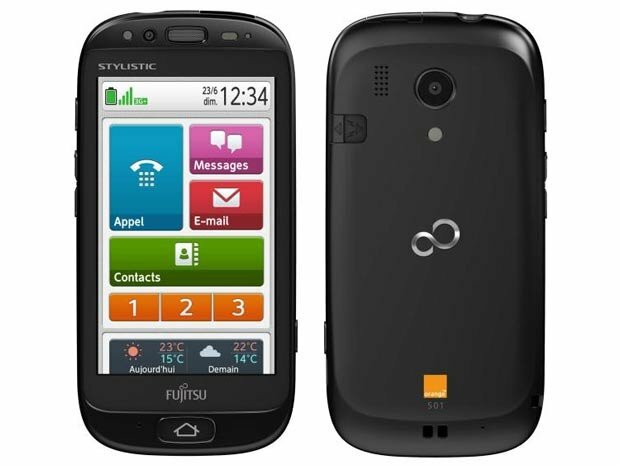
The Stylistic S01 is equipped with a Dual Core CPU, the Snapdragon from Qualcomm, clocked at 1.4 GHz powered by 1GB RAM. The touch screen displays a slab of 4 inches. Two cameras also… One of 8.1 mega-pixels at the rear and one of 0.3 mega-pixel at the front. The internal memory is 4GB, expandable via the microSD slot. Finally, there is a waterproof smartphone which can resist 30 minutes at a depth of 1 meter. It will be sold in June.
Firefox OS
The Firefox OS phenomenon is becoming increasingly important, with the presentation of Keon, the first smartphone boarding the mobile OS, as well as the discovery of two new devices, from LG and Huawei …
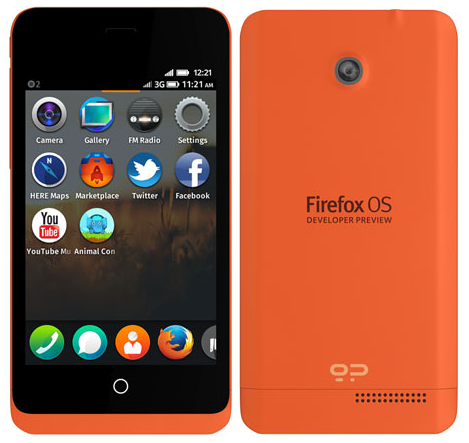
The Keon, which will be released in a few days, costing somewhere between $100 and $150, is primarily intended to developers who want to create applications for Firefox OS. Therefore, it is equipped with a Dual Core CPU, the Snapdragon clocked at 1 GHz coupled with 512 MB ​​RAM. It has a 3.5 inch touchscreen, with 480×320 pixels resolution. It features a 3 megapixel camera at the rear, with 4 GB of internal storage expendable via the microSD slot. Bluetooth and WiFi for wireless communications, GPS and a 1580 mAh battery.
For the rest, two smartphones branded LG and Huawei, have been seen in the stand of Telefonica, one of the main operators which support Firefox OS.
Media Q M310
Behind this rather bizarre name lies a multimedia station. Huawei decidedly fates muscles, to assert itself on the international market.
This small HD media player (14mm thick) is equipped with a Quad CoreCPU, the Cortex A-9 clocked at 1.2 GHz, powered by 1GB of RAM. It embeds SmartOS and has 4GB of internal memory, expandable via the microSD slot. A pretty good connectivity: HDMI (x2), stereo jack Headphone / Microphone, USB 2.0 (x2), Bluetooth and WiFi.
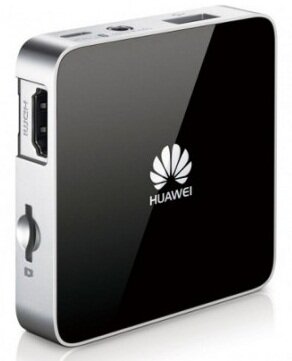
Intended to accomplish two main functions: one of media centre because it can read almost all audio/video formats, and one of gateway because it can display the screen of your tablet or smartphone on your TV via the Huawei Multi-Screen application and also allows the management of removable media. It comes without remote control, we think that it will be controlled by a smartphone. No information on the release date, but it is announced for less than $100.
Dell Ophelia
The Raspberry Pi seems to have given ideas to other manufacturers … So here is Ophelia, a miniature computer project (no more bigger than a USB flash) for less than $100, initiated by Dell.
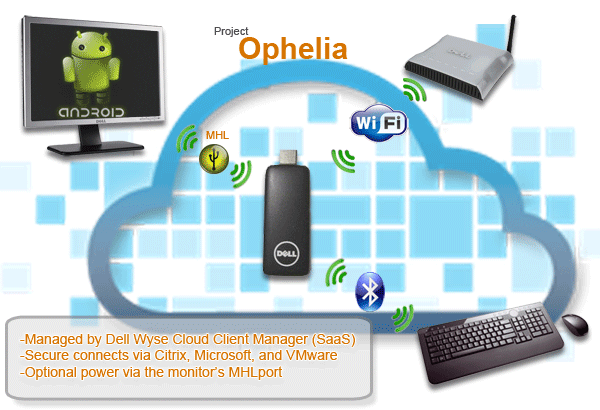
This computer is equipped with a Dual Core CPU, the Cortex A-9 1.6 GHz powered by 1GB of RAM. It has 8GB of internal memory, expandable via the microSD slot. the connectivity is sketchy, WiFi, Bluetooth 4.0 and HDMI port at the end, which allows the connection to TV or monitor. It also embeds an application, PocketCloud Remote Desktop that allows access to a distant computer.
It runs on Android 4.1.2 Jelly Bean. No information has filtered on the date of release.
ZTE prepares the response
While we feel Microsoft and Windows Phone 8 completely erased at the Congress, ZTE presents the V98 … Unrelated to a plane of the U.S. Air Force ! :) It is a Windows 8 tablet (Windows 8 Classic Version, not Windows 8 RT).
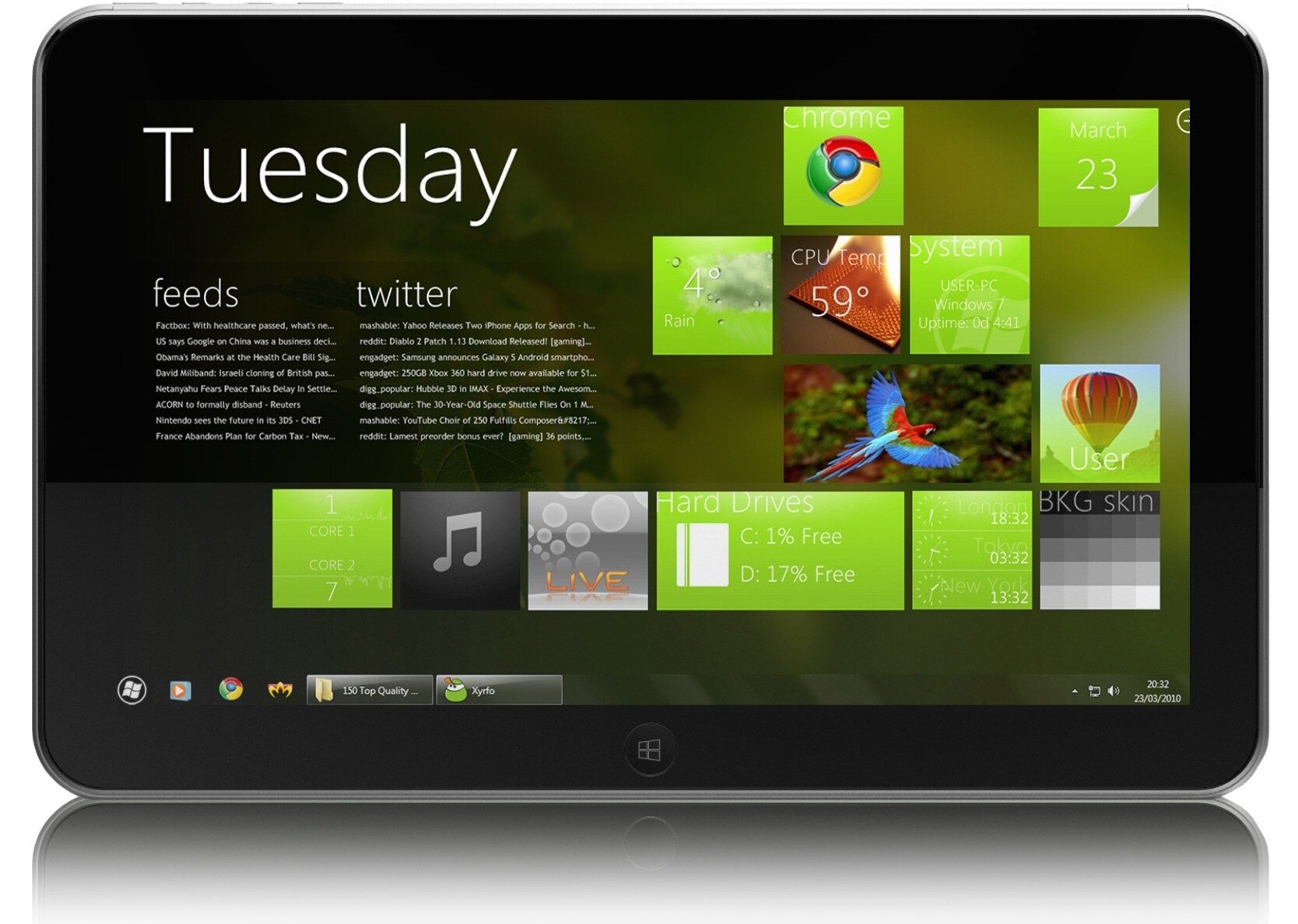
ZTE V98 is equipped with an Atom Z2760 Dual Core CPU clocked at 1.7 Ghz and powered by 2GB of RAM. The 10.1-inch touch screen has a resolution of 1366×768 pixels. No information on the pixel density. The internal memory of 32 GB is expandable via the microSD slot. Two cameras, one of 8 mega-pixels at the rear, and one of 2 mega-pixels at the front. For connectivity, you can count on Bluetooth 4.0, WiFi and this device is LTE/4G compatible. According to ZTE, the battery has more than 7 hours of autonomy.
No information has filtered on price, but the launch will begin in China by September.
Lenovo at last, some good news
Apparently a wind of anger guide Chinese manufacturers … Lenovo has not presented one, not two, but three slabs. Two of 7 inches, the Ideatab A1000 and the Ideatab A3000 and one of 10.1 inches, the Ideatab S6000.
The Lenovo Ideatab A1000 is equipped with a Dual Core CPU, the Mediatek MTK 8317, clocked at 1.2 GHz powered by 1GB of RAM. The screen is a TFT, Capacitive, and Multi-touch. It has no camera, but has a front VGA sensor of 0.3 mega-pixel which is intended only for Internet video conferencing. The battery is a lithium-ion of 3500 mAh. Dimensions: .83 x 4.76 x 0.42 inches (199 x 121 x 10.7 mm) for 340g.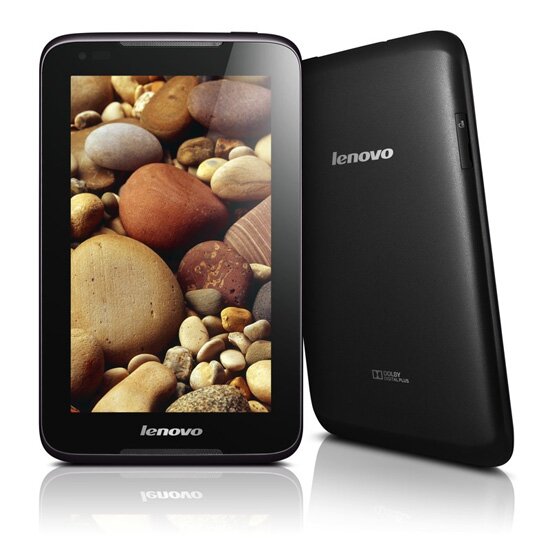
The internal memory is 16GB, expandable up to 32GB via the microSD slot. Two relatively powerful speakers are integrated at the front and have a Dolby Digital Plus treatment system , which includes several listening modes. Two versions are available, black and blue. No information on the price.
The Lenovo Ideatab A3000 is equipped with a Quad Core CPU, the MTK 8389/8125 clocked at 1.2 GHz powered by 1GB of RAM. It has WiFi and Bluetooth, and front VGA sensor. Its screen is Capacitive, Multi-touch and features IPS technology with a resolution of 1024 x 600 pixels, 170 ppi of pixel density and a HSPA option. It also has a SIM card reader.
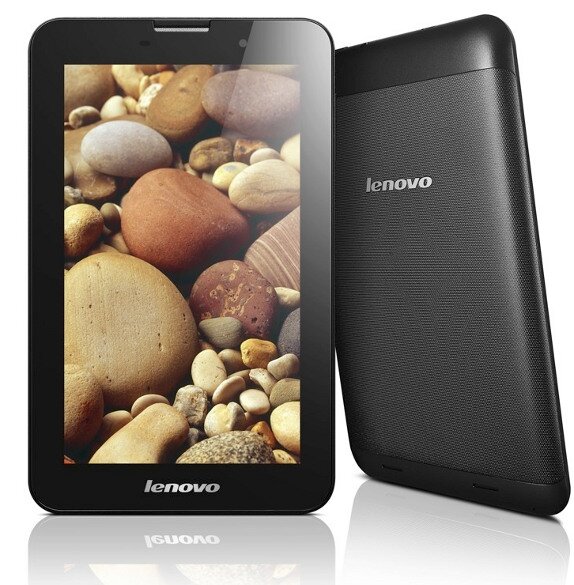
Dimensions: 7.64 x 4.72 x 0.43 inches (194 x 120 x 11 mm) for 340g. The internal memory is 16GB expandable up to 64GB via the microSD slot. No information on the price. The battery is a lithium-ion of 3500mAh. One camera at the rear, of 5 mega-pixels, and a front one of 0.3 mega-pixel.
The Lenovo Ideatab S6000 offers the same configuration as the A3000, the differences are the screen size … The S6000 has a 10.1 inches for a resolution of 1280 x 800 pixels and pixel density of 149ppi. Dimensions: 10.24 x 07.09 x 0.34 inches (260 x 180 x 8.6 mm) for 560 g. The battery is 6530 mAh.
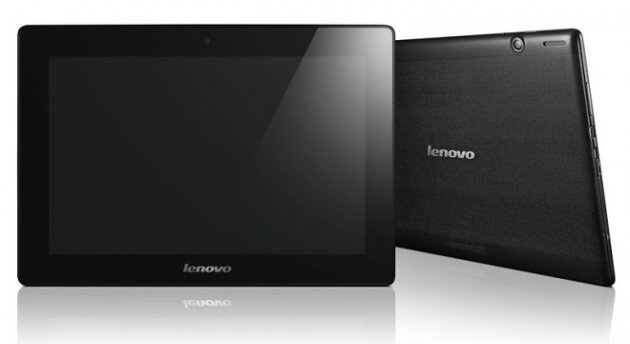
WiFi, Bluetooth 4.0, and HDMI for the connectivity. The battery provides up to 8 hours with Wi-Fi enabled. Prices have not yet been disclosed, but the availability is scheduled for September. Finally, these three tablets run on Android 4.1.2 Jelly Bean, with a Lenovo overlay.
MWC 2013 is shaping up to be a great few days. Let’s wait and see what other goodies the vendors have in store for us in tomorrows fourth and final day…













Pingback: Mobile World Congress (MWC) 2013 – The Conclusion | RefuGeeks