
Ubuntu Spyware – Is It True?

 This article is over six months old. Which means the information below may be out of date. Please keep this in mind whilst reading this article.
Back in December 2012, Richard Stallman (RMS) famously wrote a blog post on the Free Software Foundations site titled “Ubuntu Spyware: What to do?“
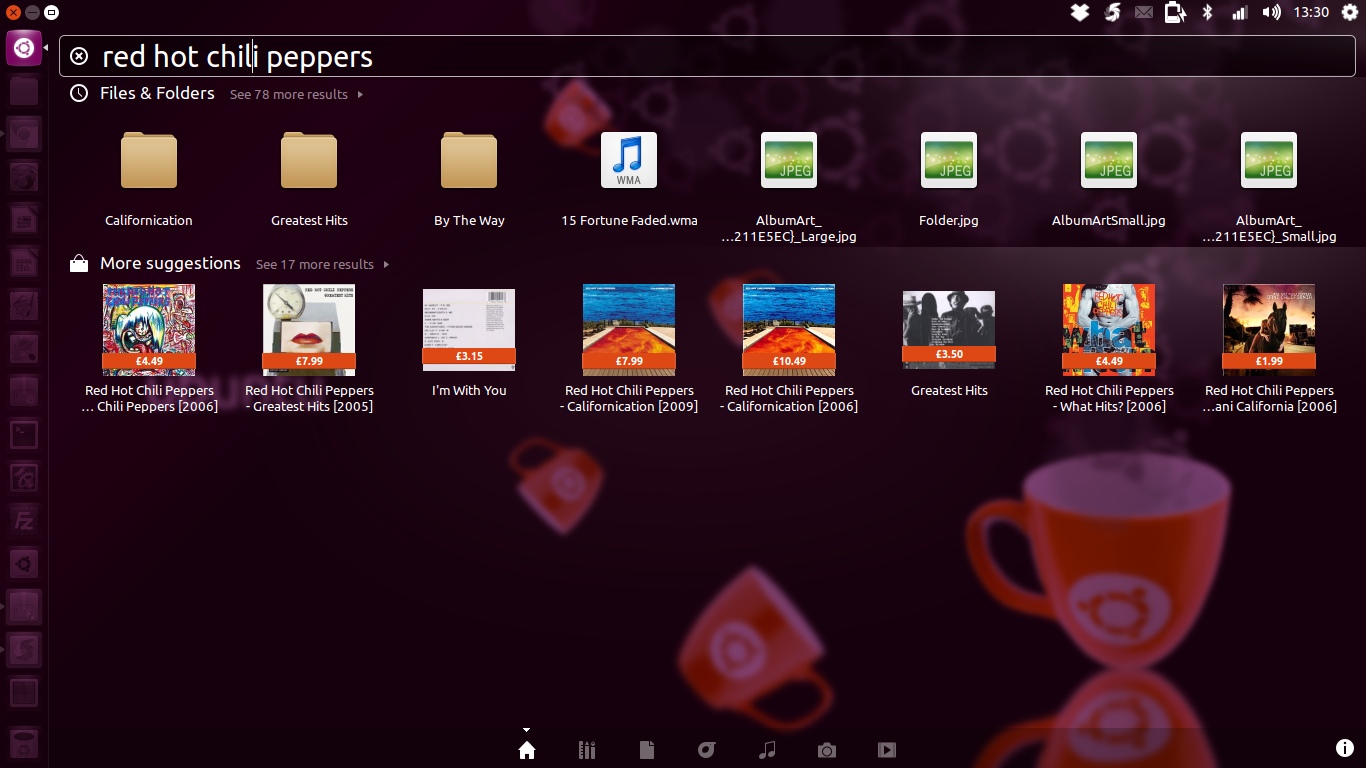
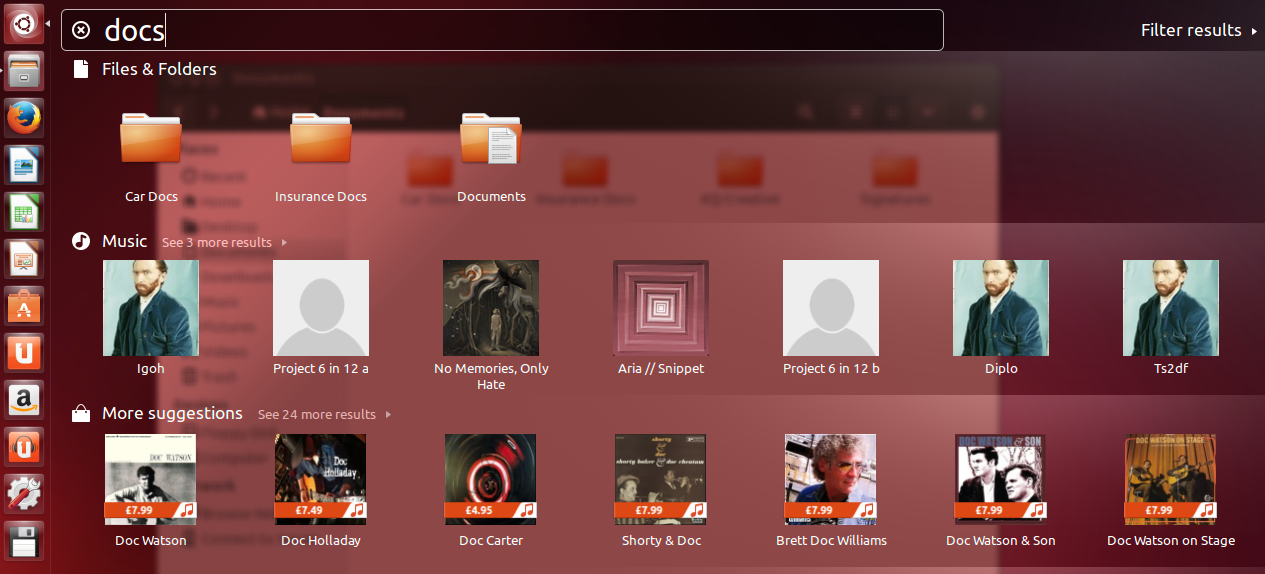
This “Ubuntu Spyware” that RMS talks about within the article is of course the Unity Amazon Lens. Just in case any of you have been living under a rock for the last few months, the Amazon Lens introduced in Ubuntu 12.10 basically sends your local searches to Canonical (the company that makes Ubuntu), which are in turn relayed to Amazon so that online Amazon search results will be displayed on your machine when you search for anything within Unity.
I must stress at this point that this information is sent securely and Canonical say that only your search terms are sent to Amazon and they do not know who searched for what; but Canonical clearly do. This feature can also be turned off extremely easily from the system settings within Ubuntu under Privacy (as shown below).
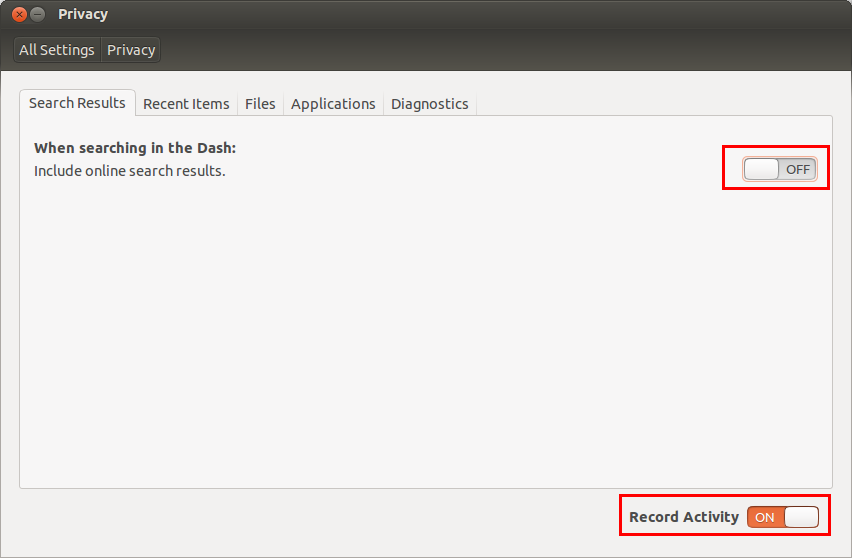
Within the article RMS is pretty rough on the decision by Canonical to include “Spyware” within Ubuntu 12.10+. RMS makes his feelings on the matter crystal clear and pleads with readers to not only stop using Ubuntu, but also not recommend it to other prospective users:
Ubuntu, a widely used and influential GNU/Linux distribution, has installed surveillance code. When the user searches her own local files for a string using the Ubuntu desktop, Ubuntu sends that string to one of Canonical’s servers. (Canonical is the company that develops Ubuntu.)
If you ever recommend or redistribute GNU/Linux, please remove Ubuntu from the distros you recommend or redistribute. If its practice of installing and recommending nonfree software didn’t convince you to stop, let this convince you. In your install fests, in your Software Freedom Day events, in your FLISOL events, don’t install or recommend Ubuntu. Instead, tell people that Ubuntu is shunned for spying.
But is this actually spyware?
Well, technically the Amazon Lens within Ubuntu is spyware. Here is the dictionary definition of spyware:
Software that self-installs on a computer, enabling information to be gathered covertly about a person’s Internet use, passwords, etc.
The Amazon Lens is installed by default during the OS install and it does obviously gather information covertly and pass this on to a third party. So in all honesty Ubuntu does contain spyware by default. But does that mean Ubuntu is dangerous and shouldn’t be used?
Well, in my humble opinion I certainly don’t think Ubuntu is dangerous, and a more valid question to ask yourselves might be “Should I trust Ubuntu/Canonical?”. I personally couldn’t care less who Canonical send my search terms too as it’s only going to be file and application names. However, I can completely empathise with anyone who feels really let down by Canonical and Ubuntu.
So why Amazon?
When the announcement was first made by Canonical CEO Mark Shuttleworth, he justifies the inclusion of the Amazon Lens in Ubuntu 12.10 with the following statement:
It makes perfect sense to integrate Amazon search results in the Dash, because the Home Lens of the Dash should let you find *anything* anywhere. Over time, we’ll make the Dash smarter and smarter, so you can just ask for whatever you want, and it will Just Work.
For me this statement begs the question “Why Amazon?“. You see, if the vision really is to allow users to “find *anything* anywhere” then surely the perfect first Lens to provide these kind of online search results would have been a search engine? I would personally really dig having Google results within the Unity Dash when I search for something – but on an on-demand basis only. I wouldn’t like having the result with every single search I run.
My personal opinion is that the Amazon Unity Lens or “Ubnutu spyware” as RMS calls it is more about making money than adding an awesome new feature for us users. You see, if you purchase something from Amazon off the back of a Unity search within Ubuntu, Canonical get a small commission for that. I personally think that’s awesome as it’s a quick and easy way for many users of Ubuntu to support the project financially.
However, if money was the driver behind adding this feature (and I must stress that this is my personal opinion only) then I would have had much more respect if Mark Shuttleworth had of said this rather than dressing it up as a great new features for users.
Should I be worried about this “Ubuntu spyware“?
Ultimately that’s your call to make really. As I said above, I’m personally not that bothered about the inclusion of the Amazon search results within Ubuntu as nothing I search for is really secret or private. But I do switch it off and forget about it as I find the results extremely annoying; if I want to search Amazon then I’ll go and search Amazon. I don’t really want the results to be forced down my throat (which they’re not if you turn them off).
As I’ve touched on above. I personally think that the justifications for the inclusion of this “Ubuntu spyware” aren’t 100% honest and this has made me lose some of the respect I have for Canonical/Ubuntu so I am beginning to think if it’s now time to move away from Ubuntu and too another Linux distribution as this isn’t in keeping with the mantra of FOSS (Free & Open Source Software). I love Ubuntu, it works well for me and compliments my workflow well. However, if Canonical do start putting prospected profits before their users needs or wants then I feel it’s time to move on.
What do you guys think? Is this “Ubuntu spyware?” a positive inclusion or a negative one? I’m really interested to hear other community members thoughts on this and if any of you guys have moved away from Ubuntu for this reason (or any other)? Leave your feedback in the comments section below…





































Pingback: Why I'll Leave Ubuntu Linux Kev Quirk